
Introduction
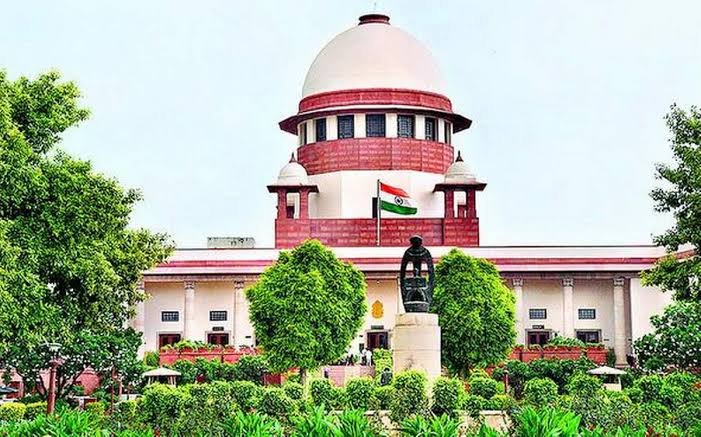
Does an alleged physical altercation with a working journalist inside the premises of India’s highest court remain a mere crowd-management incident, or does it attract strict criminal liability and judicial contempt? Recently, the Supreme Court of India took cognizance of an application filed by a pregnant woman journalist and issued a formal notice to Leader of the Opposition in the Lok Sabha Rahul Gandhi and other respondents.
The controversy stems from an incident on October 12, 2026, when opposition leaders marched into the Supreme Court complex to file a petition challenging the Election Commission of India’s Special Intensive Revision (SIR) of electoral rolls. This article breaks down the factual background of the plea, the specific offences invoked under the Bharatiya Nyaya Sanhita, 2023 (BNS), and the broader constitutional questions surrounding demonstrations inside judicial premises. Whether you are a general reader, a journalist, a law student, or a legal practitioner, this guide explains what the court’s notice means under Indian law.
Factual Background and Applicable Legal Provisions
Background of the Incident and the Plea Before the Court
On October 12, 2026, Leader of the Opposition Rahul Gandhi and other opposition leaders marched to the Supreme Court premises amidst protests demanding the resignation of Chief Election Commissioner Gyanesh Kumar over alleged irregularities in the Special Intensive Revision (SIR) of voter lists. Journalist Richa Parashar, who was 11 weeks and 3 days pregnant at the time and was covering the gathering, alleged in her application that she was forcefully pushed near the gate inside the court premises by Rahul Gandhi and his accompanying security personnel, causing her to lose balance and fall to the ground.
According to the applicant’s plea, her mobile phone was shattered, her collar microphone was dislodged, and she sustained injuries to her hands and lower abdomen, requiring emergency medical evaluation at the Casualty ward of Sir Ganga Ram Hospital in New Delhi. Conversely, the Congress party and its representatives have strongly denied the allegations, dismissing the claims as politically motivated propaganda.
Court and Bench Reference
The journalist’s application for impleadment and directions was filed in a pending writ petition titled Digant Mishra v. Union of India (W.P.(C) No. 1360/2026), which was originally instituted by four advocates seeking strict guidelines against political demonstrations and processions inside court premises.
Following oral mentioning of the application by Senior Advocate Gaurav Bhatia on behalf of the applicant, a three-judge bench comprising Chief Justice of India (CJI) Surya Kant, Justice Joymalya Bagchi, and Justice V. Mohana issued formal notice to Rahul Gandhi and the other respondents, seeking their formal reply to the allegations.
Relevant Statutory Provisions Under BNS, BNSS, and the Constitution
In her formal complaint submitted to the Deputy Commissioner of Police (DCP), New Delhi, on October 17, 2026, the applicant sought the registration of a First Information Report (FIR) under the following provisions of the Bharatiya Nyaya Sanhita, 2023 (BNS):
| Bharatiya Nyaya Sanhita (BNS, 2023) Section | Former Indian Penal Code (IPC, 1860) Section | Nature of Offence and Legal Scope |
|---|---|---|
| Section 74 BNS | Section 354 IPC | Assault or use of criminal force to a woman with intent to outrage her modesty. |
| Section 115(2) BNS | Section 323 IPC | Punishment for voluntarily causing simple hurt to any person. |
| Section 125 BNS | Section 336 IPC | Act endangering human life or the personal safety of others through rashness or negligence. |
| Section 131 BNS | Section 352 IPC | Punishment for assault or use of criminal force otherwise than on grave and sudden provocation. |
| Section 3(5) BNS | Section 34 IPC | Acts done by several persons in furtherance of common intention, establishing joint criminal liability. |
Beyond the substantive penal sections of the BNS, two procedural and constitutional frameworks are central to this proceeding:
- Section 173 of the Bharatiya Nagarik Suraksha Sanhita (BNSS), 2023 (formerly Section 154 CrPC): Governs the statutory duty of the police to register an FIR upon receiving information disclosing the commission of a cognizable offence.
- Article 129 of the Constitution of India & the Contempt of Courts Act, 1971: Empowers the Supreme Court, as a Court of Record, to punish for contempt of itself and to safeguard the sanctity, decorum, and unobstructed functioning of its premises.
Core Legal Analysis and the Supreme Court’s Stance
The plea before the apex court raises several foundational legal principles that law students and citizens should understand:
- Natural Justice and the Legal Meaning of ‘Issuance of Notice’: Issuing a formal notice does not imply a finding of guilt. It is rooted in the cardinal principle of natural justice known as Audi Alteram Partem (“hear the other side”). By issuing notice, the Supreme Court has directed the respondents to place their version of events on record before the bench examines the merits of the prayers.
- Sanctity of Judicial Premises Over Political Processions: During earlier hearings in the main writ petition, the bench led by CJI Surya Kant and Justice Joymalya Bagchi made a stern observation that “no one can browbeat the judiciary.” Court compounds exist to dispense justice calmly and securely, not to serve as venues for political sloganeering or crowd mobilization.
- Preservation of Electronic and Documentary Evidence: A critical prayer in the application seeks a judicial directive to preserve all CCTV footage, access-control logs, entry passes, visitor records of the Supreme Court from October 12, 2026, and raw video recordings captured by media camerapersons. Under the Bharatiya Sakshya Adhiniyam, 2023 (BSA), timely preservation of contemporaneous electronic records is vital to establishing objective facts in disputed incidents.
- Doctrine of ‘Secondary Victimization’: The application specifically highlights that after the incident, the complainant faced online abuse and coordinated attempts to portray her complaint as a political fabrication. In modern victimology and criminal jurisprudence, subjecting a complainant to public humiliation or character assassination after reporting an offence is recognized as Secondary Victimization.
- Prayers for Mandamus, Compensation, and Contempt Action: Because the police had not registered an FIR on her October 17 complaint, the applicant approached the Supreme Court seeking directions for immediate FIR registration with a court-monitored status report, preservation of evidence, compensation for physical injury and mental trauma, personal security, and initiation of contempt proceedings for misconduct within the apex court premises.
Practical Impact on Citizens and the Legal System
While the factual dispute remains sub judice, the Supreme Court’s intervention carries significant long-term implications for Indian law and public administration:
- Equality Before the Law (Article 14 of the Constitution): By calling upon a high constitutional functionary such as the Leader of the Opposition to respond to a citizen’s plea, the Court reinforces the constitutional guarantee under Article 14 that every individual—regardless of political stature—is subject to the rule of law and judicial scrutiny.
- Workplace Safety for Field Journalists: Media professionals routinely operate in high-density, volatile environments while performing their professional duties. Judicial scrutiny of alleged physical mistreatment of a pregnant reporter sets an important precedent for protecting journalists—especially women—from intimidation or physical harm during public coverage.
- Stricter Access-Control Protocols in Court Complexes: The proceedings in Digant Mishra v. Union of India are likely to culminate in binding guidelines regulating VIP entourages, crowd entry, and security checks inside the Supreme Court and High Courts across India, ensuring that ordinary litigants, advocates, and court staff are never inconvenienced or endangered.
- Police Accountability in High-Profile Complaints: When law enforcement agencies hesitate or delay acting on complaints involving influential political figures, constitutional courts can exercise their writ jurisdiction to ensure impartial investigation and adherence to statutory mandates under the BNSS.
Frequently Asked Questions (FAQs – Schema Ready)
1. Why did the Supreme Court issue a notice to Rahul Gandhi in this case?
The Supreme Court issued a formal notice to Rahul Gandhi and other respondents on an application filed by journalist Richa Parashar, who alleged that she was pushed and injured inside the Supreme Court premises during an opposition protest march on October 12, 2026, while she was three months pregnant.
2. Which sections of the Bharatiya Nyaya Sanhita (BNS) have been invoked in the journalist’s complaint?
In her complaint to the New Delhi police, the applicant sought an FIR under Section 74 (assault or criminal force to a woman with intent to outrage her modesty), Section 115(2) (voluntarily causing hurt), Section 125 (act endangering life or personal safety of others), and Section 131 (assault or criminal force without grave provocation), read with Section 3(5) (common intention) of the Bharatiya Nyaya Sanhita, 2023.
3. Does a Supreme Court notice mean the allegations have been proven?
No. In legal procedure, the issuance of a notice is a preliminary step following the principle of natural justice (Audi Alteram Partem). It gives the respondent an official opportunity to file a counter-affidavit and contest the allegations before the court decides whether any further action or investigation is warranted.
4. Which Supreme Court bench is hearing the matter?
The application, filed within the pending writ petition Digant Mishra v. Union of India (W.P.(C) No. 1360/2026), is being heard by a three-judge bench comprising Chief Justice of India (CJI) Surya Kant, Justice Joymalya Bagchi, and Justice V. Mohana.
Conclusion
The Supreme Court’s decision to issue a formal notice on the journalist’s plea underscores the judiciary’s commitment to due process, institutional decorum, and the rule of law. As the matter progresses, the outcome will hinge on objective digital evidence—specifically the Supreme Court’s CCTV footage—alongside the formal replies filed by the respondents and the Delhi Police. Ultimately, this case will not only test the enforcement of personal safety provisions under the Bharatiya Nyaya Sanhita (BNS) but also establish enduring boundaries to keep India’s courtrooms free from political commotion.